
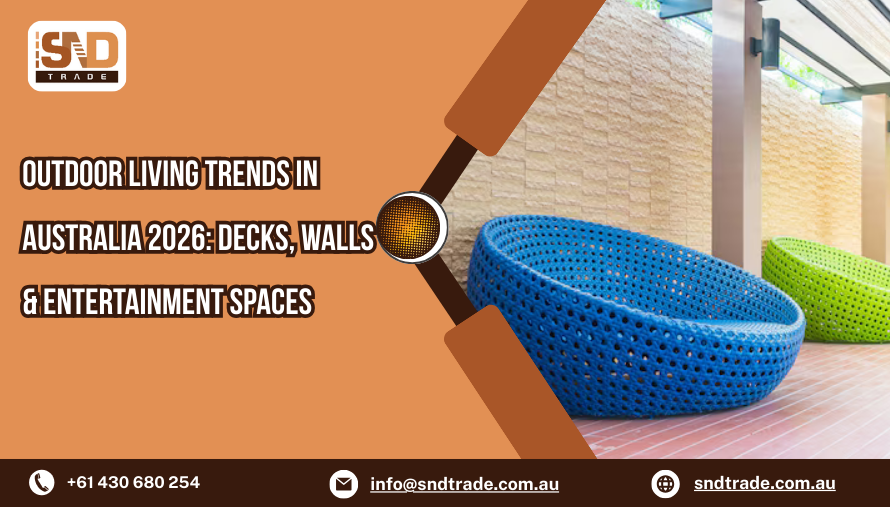
Outdoor areas in Australian homes are no longer secondary spaces. In 2026, all outdoor spaces, like decks, walls, and backyard entertainment zones, will be designed with the same intent and planning that architects use for kitchens and living rooms.
According to industry insights from landscape design platforms like Yardzen, Belgard, and Australian builders, homeowners are investing in outdoor environments that are year-round functional spaces, climate-responsive and meet their actual daily needs.
These outdoor living trends 2026 reflect a shift toward durability, sustainability, and multi-use design driven by the country’s weather conditions, rising land density, and lifestyle.
The current outdoor living trends show how Australian outdoor spaces use modern design elements to create new deck designs, wall treatments and entertainment areas.
Decking in 2026: Built for Climate, Use, and Longevity
Decks continue to serve as the essential element for outdoor design while designers now make material selections with greater purpose. Homeowners of 2026 will abandon their use of high-maintenance surfaces to choose materials that provide reliable performance under heat, rain, and coastal weather conditions.
The construction industry in NSW, Victoria, and coastal Queensland has adopted composite decking and engineered timber products as the main materials for both new building projects and renovation work. The materials protect against key concerns in Australian conditions, such as warping, moisture absorption, and UV degradation.
The design of outdoor wooden flooring maintains its market value because natural beauty holds value. Builders are choosing sustainable hardwood materials, which include spotted gum and blackbutt, for covered decks and outdoor dining areas that connect to indoor spaces.
Builders increasingly match internal flooring tones to outdoor wooden flooring to create visual continuity between spaces. A clear pattern across outdoor living trends 2026 is zoning: multi-level decks with separate areas for dining, lounging and wellness features include spas and fire pits. This approach enables small backyards to function more efficiently throughout the year.
Outdoor Walls as Design Features, Not Boundaries
Walls are no longer treated as background structures. In 2026, they play a central role in both privacy and design expression. The year 2026 will see walls become essential elements that provide both privacy solutions and design functionalities.
One of the fastest-growing specifications in Australia is WPC outdoor wall cladding, as it serves boundary walls, feature walls, and vertical garden backdrops. WPC (wood plastic composite) offers the timber look Australians prefer, without the ongoing maintenance issues of painted or stained wood.
The weather-resistance properties, termite-proof design, and fade-proof characteristics of WPC outdoor wall cladding make it ideal for coastal residences and outdoor areas that face direct sunlight.
Designers use WPC outdoor wall cladding to create visual boundaries that separate entertainment spaces from outdoor dining areas and swimming pool zones. Vertical textures, muted earth tones, and woodgrain finishes dominate current selections, aligning with biophilic design principles identified by CSIRO and landscape architecture studies.
One of the latest trends in outdoor living spaces is to reinforce the connection between the building and the landscape. Green walls and integrated planters are often layered in front of these surfaces.
Entertainment Spaces That Adapt, Not Just Impress
People in 2026 prefer outdoor entertainment because it provides them with flexible spaces that can adapt to their needs. The Australian public requires spaces that can serve their needs during meal times as well as their social events.
Today, outdoor kitchens function as complete kitchen spaces which include all necessary equipment for cooking and food storage, outdoor-rated cooking tools, cooling systems and sinks. Urban and suburban areas with restricted indoor areas have seen increasing demand for permanent outdoor kitchens, according to housing and construction trend data.
The second most important element of a system. The market now demands smart LED systems with motion-sensor lighting and app-controlled lighting zones. The design elements create safe and pleasant environments that support outdoor living activities that extend into the evening hours.
Audio systems, retractable awnings, and automated pergolas are also being integrated discreetly in deck structures that enhance user experience without creating visual disturbances.
Colour, Texture, and Material Direction
The outdoor colour palettes of Australia for 2026 lean toward earthy tones, which suit their environment. The deck and wall surfaces show a colour scheme of grey tones, warm brown hues, charcoal shades and weathered timber finishes. The colours operate as natural elements that protect the environment while decreasing heat absorption, according to research about sustainable construction.
The visual appeal of an artwork relies on the textural differences between different elements. Smooth decking surfaces are paired with ribbed wall cladding, stone elements, or concrete accents. This layered approach is a recurring theme in the latest outdoor living space designs, especially used to create modern home designs.
People can now use wider plank sizes to create bigger areas, which modernise their spaces through both composite decking and outdoor wooden flooring.
Sustainability as a Practical Choice
The year 2026 sees sustainability become essential for existence, which was previously used as a personal choice. Homeowners are prioritising materials with longer lifespans, which need less maintenance and create lower environmental impact.
The combination of composite decking, recycled timber products and WPC outdoor wall cladding enables businesses to reduce reliance on virgin hardwoods while maintaining performance.
These materials help decrease long-term ownership expenses because they eliminate the need for regular sealing, painting and replacement of materials. Water-wise landscaping, native plant integration and permeable surfaces around decks create outdoor spaces that are designed for environmental sustainability.
Final Thoughts
Outdoor spaces serves actual needs of people. Australian homeowners in 2026 choose permanent designs that deliver effective performance and reflect real lifestyles. From durable decking and outdoor wooden flooring to functional walls and adaptable entertainment zones, outdoor decks hold significant importance in the lifestyle.
SND Trade provides material solutions for Australian outdoor space construction to create modern outdoor living environments through our quality products.
Because great outdoor living doesn’t start with trends; it starts with choosing the right materials to experience better, outside.