
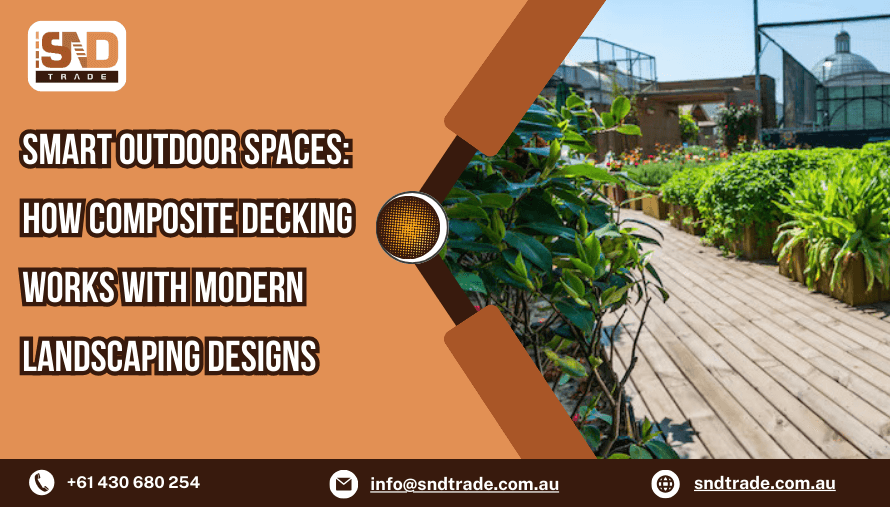
Outdoor spaces in Australia have shifted from basic patios to fully integrated lifestyle spaces. These days, you’ll see designs that tie together decking, plants, lighting, drainage, and architecture into one seamless whole. And right at the heart of it? Composite decking. It’s the piece that connects the structure to the natural landscape, but without the maintenance burden of traditional timber.
Landscaping now is more than about appearance. You need materials that can handle tough weather, save water, keep costs in check over time, and make smart use of every bit of space. Reliable composite decking suppliers understand these priorities and offer the design flexibility that works with contemporary Australian homes.
Here’s how composite decking fits right in with modern landscaping designs in 2026.
1. Designed for Australian Climate Conditions
Australian weather doesn’t mess around. You get blazing sun, heavy rain in some places, salty sea air near the coast, and of course, the ever-present risk of bushfires. It all puts outdoor materials to the test.
Composite decking boards are made from recycled wood fibres and polymers, which means they soak up way less water than real timber. They don’t warp, crack, or splinter when there are temperature variations, so landscapers can plan out bigger decks without worrying about gaps opening up every season.
These days, most composite boards come with a protective cap that keeps the colour from fading, even under Australia’s harsh sun. In cities like Sydney, Brisbane, and Perth, that kind of UV resistance isn’t just a nice-to-have; it’s non-negotiable.
When paired with proper subframe ventilation and drainage planning, composite decks maintain structural integrity for decades.
2. Supporting Multi-Zone Landscaping Layouts
Landscaping now is all about carving out zones: spots to eat, relax, cook, exercise, or let the kids run wild. Composite decking allows clear spatial separation without introducing multiple surface materials.
Designers use different board directions or complementary tones to define zones within the same deck platform. For example:
- Straight board layouts for dining areas
- Diagonal patterns to visually widen compact courtyards
- Framed border edges to anchor seating areas
Because composite boards are made with consistent colours and sizes, landscapers can execute complex layouts without the inconsistency often seen in natural timber.
Got a sloping backyard? No problem. Multi-level decks are everywhere in sloped Australian backyards. Composite boards handle the transitions from one level to the next without a hitch. They work easily with steps, retaining walls, and planter boxes, so everything fits together cleanly.
3. Seamless Integration with Hardscape and Greenery
Modern landscaping is all about mixing built elements with plants and composite decking nails that balance. Composite decking fits right in with things like:
- Porcelain pavers
- Exposed aggregate concrete
- Natural stone pathways
- Native planting beds
Unlike plain timber, composite boards won’t leach tannins or leave ugly stains on your pavers, so you can use them near garden beds or pools without worry.
If you want a really seamless look, you can build raised planters with the same composite cladding, tying everything together. Most suppliers even offer matching fascia boards and screening panels, so fences, privacy screens, and deck skirts all match up nicely.
In Australia, the trend is toward drought-hardy, deep-rooted native plants. Suppliers of composite decking boards support this approach by allowing integrated planter cut-outs without increasing rot risk.
4. Smart Drainage and Water Management
Good water management matters in any landscape. Decks need to breathe and shed water fast to avoid problems. Composite decking usually gets installed with gaps for natural drainage. Additionally, the subframe can incorporate concealed drainage channels that direct runoff into stormwater systems or rainwater harvesting tanks.
Composite decking board suppliers often include installation guides that match up with Australian building codes. That way, you get the right ventilation and structural support from the start. If you plan things right, moisture won’t get trapped, which keeps your deck and nearby garden structures in great shape for years.
5. Compatibility with Smart Outdoor Technology
Outdoor spaces now come with all sorts of tech, such as, think app-controlled lights, automated watering, or built-in speakers. Composite decking handles these upgrades easily and keeps them hidden.
You can install recessed LED lights right in the boards without worrying about cracks. Wiring fits neatly in hidden channels under hollow-core boards, so nothing’s left exposed. Many suppliers offer lighting accessories designed to match their decking, so you get a clean and sturdy finish.
And if you’re adding an outdoor kitchen or a motorised pergola, composite decking gives you a solid, durable base. It can handle heavy appliances and busy feet without the dents or scratches you’d get from softer timbers.
6. Reduced Maintenance in Landscape Design
Maintenance plays a big role when you’re planning a landscape. Timber decks? They need sanding, oiling, and sealing every few years, especially if you’re near the coast or high-rainfall areas. Composite decking breaks that cycle. Cleaning typically involves water and mild detergent, reducing chemical runoff into gardens.
Suppliers of composite decking boards always highlight low maintenance as a key benefit because it reduces long-term environmental impact and ongoing cost. For busy households or investment properties, that kind of durability supports landscape longevity without constant upkeep.
7. Sustainable Material Considerations
Sustainability is something Australian construction actually measures. Most composite boards use a high mix of recycled plastic and reclaimed wood fibre. By choosing these, you’re not leaning on virgin hardwood, which helps protect forests. The construction industry’s own reports show that longer-lasting materials cut down on emissions across a product’s whole life.
Reputable composite decking suppliers provide documentation on recycled content percentages and back it up with warranties. That way, landscapers and builders can choose materials knowing exactly what they’re getting.
Conclusion
Smart outdoor spaces in 2026 are defined by integration. Landscaping and decking aren’t separate; they’re designed as one complete system. Composite decking makes this easy. Its durability, climate resistance, low maintenance, and design flexibility are suited to Australian conditions. Whether you’re working with a big, multi-level yard or a tiny city courtyard, your choice of materials shapes how well everything holds up over time.
If you are planning a landscaping project that combines style, sustainability, and real structural strength, SND Trade is one of the best composite decking suppliers serving options made for the way Australians actually live outdoors.
Design with intention. Build with confidence. Make smarter outdoor spaces with SND Trade.