
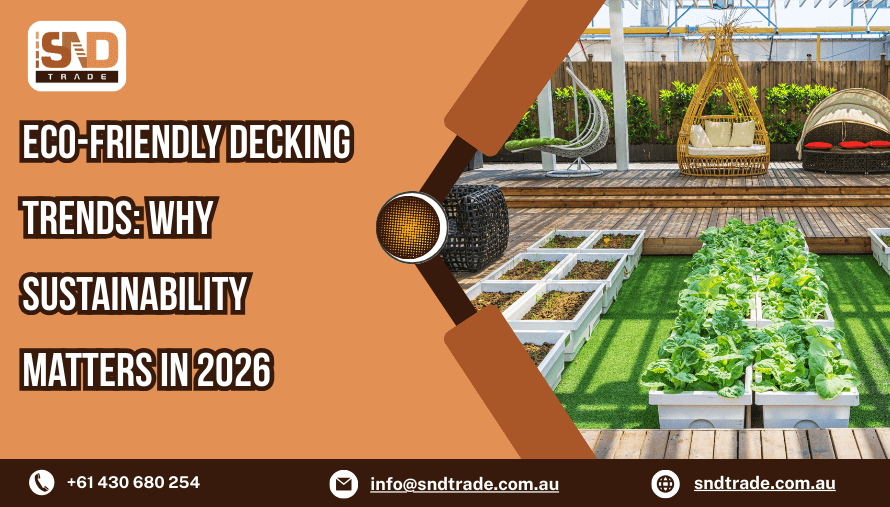
Sustainability isn’t just a buzzword in Australian construction anymore. It’s something builders and homeowners actually measure and track. In 2026, eco-friendly decking is gaining popularity, driven by innovative materials, stricter building regulations, and individuals who want their outdoor spaces to last, not just look good for a season or two.
All over Sydney, Melbourne, Brisbane, and even in the regions, people are building bigger decks and patios, but they’re also thinking twice about what goes into them.
The Green Building Council of Australia points out that buildings pump out a huge chunk of the country’s carbon emissions, so the materials you pick for your deck really matter. Sure, decking might seem small, but when you add up the effects of logging timber, using chemical treatments, and replacing short-lived products, it takes a toll. That’s why sustainability is now at the forefront when people design outdoor spaces.
Here are the eco-friendly decking trends you should keep in mind while selecting the best composite decking Australia for 2026 and why it actually matters.
1. Recycled Composite Materials Leading the Market
Traditional hardwood decks need sealing, staining, and after a decade or so, sometimes even sooner, they’re ready for replacement. Composite boards made from recycled timber fibres and reclaimed plastics offer longer lifespans and reduced maintenance.
Many products marketed as the best composite decking Australia now uses up to 95% recycled material. That means less waste heading to landfill and less pressure on forests. Plus, composite boards skip the chemical preservatives and stains, so you’re not washing toxins into the ground every time it rains.
Australian weather can be brutal with harsh sun, salty sea breezes, and heatwaves. Timber doesn’t hold up the way composite does. These boards resist moisture, termites, and warping, so they stay solid year after year. When homeowners compare lifecycle cost rather than upfront cost, recycled composite systems increasingly outperform hardwood options.
2. Longer Lifespans Reduce Environmental Impact
One of the most overlooked aspects of sustainability is durability. If your deck lasts 3 decades instead of ten years, you’re cutting down on waste and saving resources.
Australian building research consistently highlights lifecycle performance as a key sustainability metric. Products that require less replacement reduce material transport emissions, waste generation, and manufacturing energy use.
That’s why decking contractors are talking more about total lifespan cost instead of just price per square metre. A deck that sticks around for 30 years means less junk in the landfill and less mess for the environment every time you rebuild.
3. Steel and Low – Treatment Framing Systems
It’s not just about the boards; the frames underneath are evolving, too. Traditional treated pine framing relies on chemical preservatives to prevent rot and termites. Now, more builders are using galvanised steel frames that don’t warp, twist, or need those chemical treatments.
Steel frames can last for decades with barely any wear and tear. Pair them with composite decking, and you’ve got an outdoor space that’s built to last, especially in coastal or bushfire-prone areas where the weather really tests your materials.
Experienced decking contractors are increasingly recommending hybrid systems (steel frames with composite boards) for strength, durability, and a lighter footprint on the environment.
4. Sustainable Timber – Used Strategically
Eco-friendly decking doesn’t mean saying goodbye to timber. It just means using it smarter. Builders are picking FSC-certified hardwoods, plantation-grown timber, or reclaimed wood for spots where it really counts, particularly in covered alfresco zones.
In Australia, people still love spotted gum and blackbutt, as long as they know exactly where it comes from. These days, architects often mix timber features with composite decking to cut down on hardwood use. They use this blended material approach that balances aesthetics and environmental responsibility.
5. Energy-Efficient Deck Lighting
Deck lighting has moved on from conventional bulbs to LEDs and solar-powered lights. LEDs use about 75% less energy than traditional options, which is a big deal. With all the sunlight Australia gets, solar deck lights are becoming increasingly viable.
Motion sensors and timers further reduce unnecessary energy consumption. By 2026, decking isn’t just about the wood or the boards; it’s about making the whole outdoor space run smarter.
6. Water Management and Drainage Systems
Water’s a huge deal, especially in places hit by drought. Decks now come with better drainage to move rainwater into tanks or garden beds, not just out onto the lawn. Good drainage keeps timber from rotting and helps decking last longer.
Builders are using waterproof coatings and moisture-resistant materials, too, which means fewer repairs down the line. These days, smart decking contractors get drainage sorted right from the start, so homeowners don’t have to deal with water damage later.
7. Low-Maintenance Equals Lower Chemical Use
Deck upkeep isn’t just a hassle; it can be rough on the environment. Sanding, staining, sealing, painting… all those steps add chemicals to the mix every few years. The best composite decking Australia skips all the need for oiling and sealing.
Usually, you can just hose it down, and you’re done. Over time, this cuts way back on chemicals and waste. For 2026, this is one of the biggest reasons people are picking composite decks.
8. Native Landscaping Integration
Decking’s gone beyond just the boards. Native landscaping around deck perimeters reduces irrigation demand and supports biodiversity. Aussie plants don’t need much water and help stabilise soil around deck footings.
Deep-rooted natives soak up rain and stop erosion. It’s common to see new decks with built-in planters these days. It boosts micro-ecosystems and improves visual appeal.
9. Compliance and Green Certifications
Green Star ratings and other eco standards are shaping how we build, both at home and in business. Not every home gets fully certified, but everyone expects builders to use greener methods now. Homeowners want to know about recycled materials, where things come from, and if products are built to last.
Contractors need real answers, not just sales talk. The market for the best composite decking Australia keeps growing because manufacturers are open about their environmental impact and lifecycle performance metrics.
Built Your Eco-Friendly Decking
Australia’s climate is getting more unpredictable as materials cost more, and people care more about the planet than ever. So, the way we build outdoors is changing fast. Sustainability is about making things that last, work better, and don’t trash the environment.
Eco-friendly decking helps cut down on landfill, uses fewer harsh chemicals, saves energy, and creates outdoor spaces that can handle Australia’s tough conditions.
Thinking about a new project? If you want materials that hold up over time and actually do right by the environment, check out SND Trade. We provide the best composite decking Australia that fits perfectly with where Australia’s heading on sustainability.
Build smarter. Build longer. Build responsibly, with SND Trade