
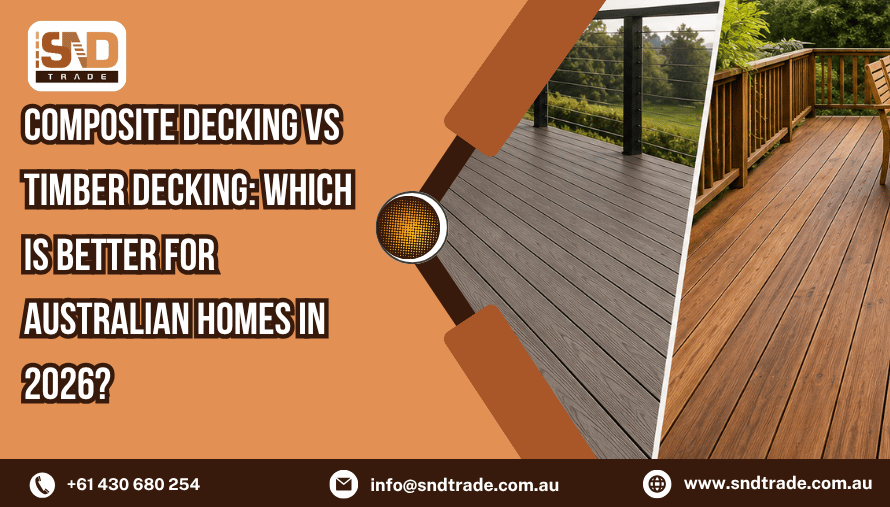
Outdoor living has become one of the most important parts of modern Australian homes. Whether it’s a backyard entertainment area, poolside retreat, rooftop deck, or alfresco dining space, homeowners are investing more than ever in creating functional outdoor environments.
One of the biggest decisions during any outdoor renovation is choosing the right decking material. For decades, timber was the default option. However, as homeowners become more focused on durability, maintenance costs, sustainability, and long-term value, composite decking continues to gain popularity across Australia.
The question many homeowners ask is simple: Composite decking or timber decking? Which option is better in 2026?
The answer depends on several factors, including budget, maintenance expectations, climate conditions, appearance preferences, and long-term performance.
This guide compares both options to help Australian homeowners make an informed decision.
Understanding Composite Decking and Timber Decking
Before comparing performance, it’s important to understand the difference between these materials.
What Is Composite Decking?
Composite decking is manufactured using a blend of recycled wood fibres and plastic polymers. Modern boards often feature a protective outer layer that improves resistance to stains, moisture, fading, and scratches.
Composite decking is designed to replicate the natural appearance of timber while reducing many of the maintenance challenges associated with traditional wood.
What Is Timber Decking?
Timber decking is made from natural hardwood or softwood species commonly used in Australia, including:
- Merbau
- Spotted Gum
- Blackbutt
- Jarrah
- Treated Pine
Timber offers a natural appearance and unique grain patterns that many homeowners appreciate. However, it requires regular maintenance to preserve its appearance and structural integrity.
Performance in Australian Weather Conditions
Australia presents some of the toughest environmental conditions for outdoor building materials.
Decking surfaces must withstand:
- Intense UV exposure
- Heavy rainfall
- Coastal salt air
- Humidity
- Temperature fluctuations
- Bushfire-prone environments
Get a Free Sample
Not sure which material suits your project? Request a free sample and we'll help you pick the right fit for Melbourne's climate.
Request Free Sample →Composite Decking Performance
Composite boards are engineered specifically for outdoor use.
Benefits include:
- UV-resistant surfaces
- Moisture resistance
- Reduced expansion and contraction
- Protection against warping and cracking
- Resistance to termites and pests
Most premium products are specifically designed to handle Australian climate conditions.
Timber Decking Performance
Natural timber performs well when properly maintained, but environmental exposure can lead to:
- Fading
- Splitting
- Cracking
- Rot
- Mould growth
- Termite damage
Regular maintenance becomes essential, particularly in coastal and high-rainfall areas.
Winner: Composite Decking
For long-term weather resistance, composite decking generally outperforms timber.
Maintenance Requirements
Maintenance is one of the biggest reasons homeowners are moving away from traditional timber.
Timber Maintenance
A timber deck typically requires:
- Annual inspections
- Cleaning
- Sanding
- Oiling
- Sealing
- Re-staining
Without maintenance, timber can quickly lose its appearance and structural performance.
Composite Decking Maintenance
Composite decking requires significantly less upkeep.
Routine care generally involves:
- Sweeping debris
- Washing occasionally with water and mild detergent
- Cleaning spills promptly
There is no need for sanding, staining, painting, or sealing.
Winner: Composite Decking
Homeowners looking for low-maintenance outdoor living often prefer composite materials.
Lifespan and Durability
Decking should be viewed as a long-term investment.
Timber Lifespan
Depending on species, climate exposure, and maintenance, timber decks typically last:
- 10 to 20 years
- Longer with consistent maintenance
Composite Decking Lifespan
Premium composite decking products can last:
- 20 to 30 years
- Sometimes longer with proper installation
Most quality manufacturers offer extended warranties that reflect confidence in product durability.
Winner: Composite Decking
The longer lifespan often offsets the higher initial investment.
Appearance and Design Flexibility
Visual appeal remains a major factor for homeowners.
Timber Appearance
Timber offers:
- Natural grain variation
- Authentic wood texture
- Traditional aesthetic appeal
Each board is unique, creating a distinctive appearance.
Composite Appearance
Modern composite decking has improved significantly.
Today’s products feature:
- Realistic woodgrain textures
- Natural colour variations
- Contemporary finishes
- Consistent appearance
Popular colours include:
- Coastal Grey
- Charcoal
- Teak
- Walnut
- Silver Ash
- Merbau-inspired tones
Many homeowners appreciate the consistency and modern look offered by composite boards.
Winner: Personal Preference
Timber appeals to traditionalists, while composite suits modern outdoor designs.
Cost Comparison
Budget often influences the final decision.
Timber Decking Costs
Initial material costs are generally lower.
However, ongoing expenses include:
- Decking oils
- Sealers
- Cleaning products
- Repairs
- Replacement boards
Composite Decking Costs
Composite decking typically involves:
- Higher upfront material costs
- Lower long-term maintenance expenses
- Reduced repair costs
When calculating total ownership costs over 20 years, composite decking often becomes the more economical option.
Winner: Composite Decking (Long-Term Value)
While timber may cost less initially, composite frequently provides better value over time.
Sustainability and Environmental Impact
Sustainability is becoming increasingly important in Australian construction.
Composite Decking Sustainability
Many composite products contain:
- Recycled plastic
- Reclaimed wood fibres
- Reduced demand for virgin timber
This helps reduce landfill waste while preserving natural resources.
Timber Sustainability
Timber can be environmentally responsible when sourced from certified forests.
However, ongoing harvesting and processing can have environmental impacts depending on sourcing practices.
Winner: Composite Decking
Many environmentally conscious homeowners prefer composite materials because of their recycled content.
Safety Considerations
Safety should always be considered when selecting decking materials.
Composite Decking Advantages
Many products offer:
- Slip-resistant surfaces
- Splinter-free construction
- Consistent surface texture
These features make composite particularly popular around:
- Swimming pools
- Family entertainment areas
- Public outdoor spaces
Timber Considerations
Over time, timber can develop:
- Splinters
- Uneven surfaces
- Slippery areas due to algae or moisture
Regular maintenance helps minimise these risks.
Winner: Composite Decking
Its slip-resistant and splinter-free properties make it a practical choice for families.
Property Value and Buyer Appeal
Outdoor living spaces continue to influence Australian property values.
Real estate professionals often highlight features such as:
- Outdoor entertaining areas
- Low-maintenance landscaping
- Modern decking systems
Many buyers now actively seek low-maintenance homes that require less ongoing upkeep.
Working with reputable composite decking suppliers helps homeowners invest in products that enhance both lifestyle and property value.
Composite Decking vs Timber Decking: Quick Comparison
| Feature | Composite Decking | Timber Decking |
| Maintenance | Low | High |
| Lifespan | 20-30+ Years | 10-20 Years |
| Termite Resistance | Excellent | Vulnerable |
| Moisture Resistance | Excellent | Moderate |
| UV Resistance | High | Moderate |
| Appearance Consistency | High | Natural Variation |
| Sustainability | Recycled Materials | Renewable Resource |
| Upfront Cost | Higher | Lower |
| Long-Term Cost | Lower | Higher |
| Safety | Splinter-Free | Can Splinter |
Which Decking Option Is Best for Australian Homes in 2026?
For homeowners seeking:
- Low maintenance
- Long-term durability
- Weather resistance
- Sustainability
- Modern aesthetics
Composite decking is often the stronger choice.
For those who prioritise:
- Natural timber appearance
- Traditional craftsmanship
- Lower initial costs
Timber remains a viable option.
However, as maintenance costs continue rising and outdoor lifestyles evolve, composite decking is becoming the preferred solution for many Australian homeowners.
Final Thoughts
Choosing between composite decking and timber decking ultimately depends on your priorities.
If you want an outdoor space that looks great, performs well in Australia’s harsh climate, and requires minimal upkeep, composite decking delivers significant long-term benefits.
At SND Trade, we provide premium decking solutions designed specifically for Australian conditions. Whether you’re planning a new deck, upgrading an existing outdoor area, or exploring modern landscaping ideas, our products are built for durability, style, and performance.
Invest once, enjoy for decades, and create an outdoor space that works for your lifestyle.
Frequently Asked Questions
Is composite decking better than timber in Australia?
For many homeowners, yes. Composite decking offers better durability, lower maintenance, and greater resistance to weather, moisture, and termites.
Does composite decking increase property value?
A professionally installed composite deck can improve outdoor living appeal and potentially increase property value.
How long does composite decking last?
Premium composite decking products can last 20 to 30 years or more with proper installation and basic maintenance.
Is timber decking cheaper than composite decking?
Timber usually has a lower upfront cost, but long-term maintenance expenses often make composite decking more cost-effective.
Which decking material requires less maintenance?
Composite decking requires significantly less maintenance than traditional timber decking.