
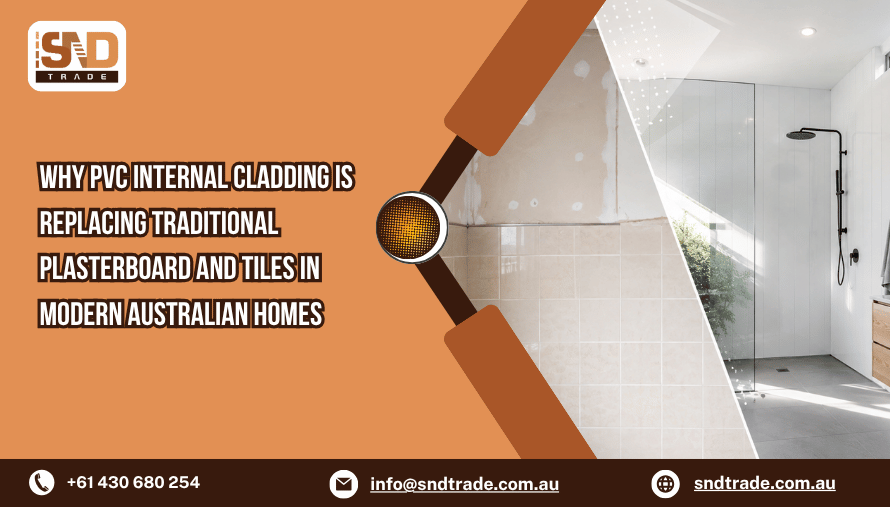
If you’ve renovated a home in Australia recently, you’ve probably noticed a shift happening in bathrooms, kitchens, and laundries. Plasterboard and tiles, once the default choice, are slowly losing ground to PVC internal cladding.
It’s not just a passing trend. Builders, renovators, and homeowners are choosing PVC wall panels because they solve real, everyday problems that plasterboard and tiles never quite managed to fix.
Remarkably, the trend for hassle-free living is evident even outside the house, where homeowners conducting research for home improvements may buy composite decking that will give them attractive entertaining spaces without the maintenance of timber.
In this article, we’ll look at why this shift is happening, how PVC cladding compares to older materials, and what you should know before choosing it for your next project.
What Is PVC Internal Cladding?
PVC internal cladding panels are light panels that can be installed on the interior walls or ceilings as decoration. Panels vary according to finish with options including smooth, patterned, timber-effect, stone-effect and contemporary designs.
The primary reason why people use these panels is convenience. Rather than painting drywall or cleaning grout between tiles, the homeowner will have an already finished surface which is usually easy to maintain.
Not all PVC panels may fit in every situation. Make sure you follow the installation guidelines.
Why PVC Internal Cladding Is Becoming Popular
1. Better Resistance to Moisture
Steam-filled bathrooms and splashy laundries are brutal on regular walls.
PVC handles this naturally. Suitable PVC cladding systems cope with daily moisture far better than painted plasterboard ever could.
Worth flagging, though cladding isn’t a magic waterproofing layer. Wet areas still need to tick the boxes under the National Construction Code and relevant Australian Standards, plus whatever the manufacturer specifies.
2. Easier to Clean
Nobody enjoys scrubbing grout on a Sunday.
Smooth PVC panels usually need nothing more than a soft cloth and a decent cleaner. Fewer joints mean less grime buildup compared to tiled walls.
For busy households, that’s real-time back.
3. Potentially Faster Installation
Tiling is a process of prep, adhesive, cutting, grouting, and curing. Days can pass before it’s usable.
PVC cladding, depending on the product, often skips most of that. Less mess, less waiting.
If you’re renovating a home people are still living in, that speed matters more than it sounds.
4. A Wide Range of Designs
Modern PVC panels aren’t the plain plastic sheets people picture.
You’ll find:
- Minimalist finishes
- Timber-look panels
- Stone-look textures
- Decorative patterns
Plenty of room to design a bathroom or laundry that actually looks intentional.
PVC Cladding vs Plasterboard and Tiles: Comparison
There is no single wall finish that works perfectly for every Australian home. The best choice depends on the room, budget, appearance and performance requirements.
| Feature | PVC Internal Cladding | Plasterboard | Tiles |
| Moisture resistance | High for suitable products | Depends on product | High with correct waterproofing |
| Cleaning | Generally easy | May require repainting | Easy surface, grout needs care |
| Maintenance | Generally low | Can require repairs/painting | Grout may require maintenance |
| Installation | Often relatively quick | Common installation method | Usually more labour-intensive |
| Weight | Lightweight | Lightweight | Generally heavier |
| Design options | Wide range | Paint and finishes | Very wide range |
Thus PVC should be seen as an alternative, not a universal solution.
Get a Free Sample
Not sure which material suits your project? Request a free sample and we'll help you pick the right fit for Melbourne's climate.
Request Free Sample →Where Can PVC Internal Cladding Be Used?
It depends on the specific product, but common spots include:
- Bathrooms and ensuites
- Laundries
- Utility rooms
- Select kitchen areas
- Garages
- Residential or commercial interiors
Before buying anything, confirm the product’s actually rated for where you’re putting it. Wet areas especially need the right substrate prep, waterproofing, and ventilation sorted first. Cladding is one piece of the puzzle, not the whole thing.
How Does Composite Decking Fit Into Modern Home Renovations?
Quick clarification: buy composite decking is an outdoor keyword, not an indoor one. Decking and internal cladding aren’t interchangeable.
Composite decking shows up on decks, patios, balconies, and poolside areas anywhere outdoor entertaining happens.
But here’s the connection. A homeowner might clad the laundry in PVC while also upgrading the backyard deck with composite boards. Different products, different jobs, same underlying goal: a home that doesn’t need constant maintenance to look good.
What to Check Before Buying PVC Internal Cladding
A few things worth confirming before you commit to a product.
Check the Product’s Intended Use
Not every panel suits every room. Bathrooms and wet areas need cladding specifically rated for that environment.
Measure Accurately
Get your wall heights, widths, and cutouts right for windows, doors, corners, and the lot before ordering panels.
Understand Installation Requirements
Different systems need different adhesives, trims, and prep work. Skip the manufacturer’s instructions at your own risk.
Consider Ventilation
Moisture-resistant doesn’t mean ventilation-optional. Keep proper airflow and exhaust systems running in wet rooms regardless.
Check Cleaning Instructions
Not every PVC finish tolerates harsh chemicals. Stick to what the manufacturer actually recommends.
Common Mistakes to Avoid
Choosing Only on Price
Cheapest isn’t always smartest. Weigh up thickness, finish quality, and long-term durability, not just the sticker price.
Installing Over a Poor Surface
Damp or uneven walls need fixing first. Cladding over problems just hides them temporarily.
Treating Cladding as Waterproofing
PVC panels support a wet area; they don’t replace proper compliant waterproofing underneath.
Ignoring Australian Building Requirements
Relevant NCC rules and local regulations still apply. When in doubt, get a qualified professional involved.
Using the Wrong Product
Want to buy composite decking? Choose something built for outdoor use. Need wall panels? Pick cladding designed specifically for interiors.
Frequently Asked Questions
- Why is PVC interior cladding gaining popularity in Australia
Moisture-resistance, easy cleaning and contemporary appearance make this an enhancement where appropriate.
- Is PVC internal cladding better than plasterboard?
Depends on where it’s going. PVC often wins in moisture-prone spots; plasterboard still works well in dry interior rooms.
- Can PVC cladding be used to replace bathroom tiles?
Yes, but it all depends on whether the wet-proofing aspect has been taken care of underneath.
- Can I purchase composite decking for indoors?
No. Composite decking is built for outdoor applications. Indoors, you want PVC internal cladding instead.
- What should I consider before buying PVC cladding?
Check its intended use, moisture rating, installation method, cleaning needs, and how well it suits your existing wall surface.
Conclusion
PVC internal cladding is carving out a solid place in Australian homes, especially in bathrooms, laundries, and other moisture-heavy spaces where plasterboard and tiles have always struggled a bit.
That same appetite for low-maintenance living shows up outdoors too, where homeowners buy composite decking to build entertaining areas that don’t need constant upkeep.
Planning a renovation? Look into what suits your specific space through SND Trade, and choose materials based on where they’re going, not just what looks good in a showroom.