
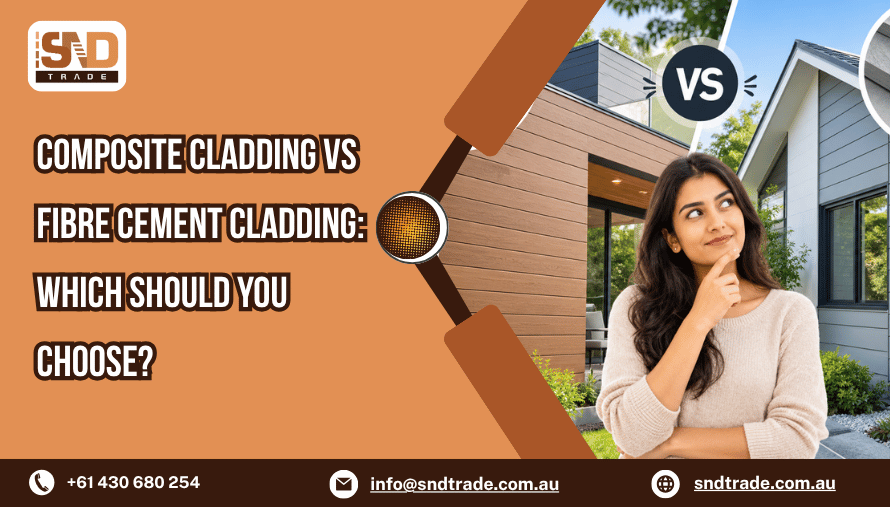
Picking cladding for your home is a big deal. It changes how your place looks, how it handles Melbourne’s wild weather, and how much time you spend on upkeep over the next 20 years.
Two materials come up in almost every conversation: composite and fibre cement. Both work well, but they suit different homes and budgets. If you’ve been searching for a composite cladding supplier Melbourne builders recommend, it helps to understand the real differences first.
This guide breaks it down in plain terms, so you can choose with confidence.
What Is Composite Cladding?
Composite cladding is made from a mix of wood fibres and recycled plastic (polymers). The result looks like timber but behaves very differently.
It doesn’t rot, it resists termites, and it doesn’t need regular painting or oiling. Boards usually come in a range of woodgrain finishes and colours.
Most composite boards are hollow or solid, and they clip onto a frame behind the wall. That makes installation fairly quick for a trained installer.
What Is Fibre Cement Cladding?
Fibre cement is a blend of cement, sand and cellulose fibres. It’s been used across Australia for decades, so builders know it well.
It comes as flat sheets, planks or panels. Many are designed to be painted, so you can pick almost any colour you like.
It’s tough, stable and non-combustible. That last point matters a lot in fire-prone areas.
Composite vs Fibre Cement: Side-by-Side
Here’s a quick snapshot of how they compare:
| Feature | Composite Cladding | Fibre Cement Cladding |
| Look | Timber-style grain | Smooth, painted finish |
| Maintenance | Very low | Repainting needed |
| Weight | Lighter | Heavier |
| Fire performance | Varies by product | Non-combustible |
| Upfront cost | Usually higher | Usually lower |
| Installation | Clip systems, quicker | Needs cutting and sealing |
Keep in mind that products differ between brands. Always check the technical data sheet before you buy.
How Do They Handle Melbourne Weather?
Melbourne can give you four seasons in one afternoon. Hot, dry summers, cold wet winters and strong winds all test your walls.
Composite cladding handles moisture well because it won’t swell or rot like timber. Some boards can expand slightly in heat, so correct spacing during installation is important.
Fibre cement is stable in most conditions. But if the paint cracks or fades and you ignore it, water can find its way in. A fresh coat every 10 to 15 years is common advice.
Coastal suburbs like Brighton or Williamstown face salt air. In these spots, check that your chosen product is rated for coastal use.
Fire Safety: Don’t Skip This Step
Parts of Victoria sit in bushfire-prone zones. If your home is in the Dandenong Ranges, Warrandyte or the outer north-east, you’ll need to check your Bushfire Attack Level (BAL) rating.
Fibre cement is non-combustible, so it often meets higher BAL requirements without fuss. Composite products vary. Some are tested for certain BAL ratings; others aren’t.
Ask your supplier for written proof of testing under Australian Standards. Never rely on a verbal “yes, it’s fine”.
Cost Over Time, Not Just Day One
Fibre cement boards are often cheaper to buy. Composites usually cost more initially.
But the full picture includes painting. A two-storey house repainted every decade can cost thousands in labour and materials. Composite skips most of that.
Think of it this way:
- Short-term budget: fibre cement often wins
- Long-term running costs: composite often wins
- Resale appeal: both do well when installed properly
Run the numbers for at least 15 years before deciding.
Which Looks Better?
That depends on your taste. Composite gives you the warm look of timber with no sanding or staining. It suits modern coastal homes, decks, feature walls and fences.
Fibre cement suits clean, contemporary designs. Think crisp lines, bold colours and the popular “Hamptons” look.
Some owners mix both. For example, fibre cement across most of the house with composite accents around the entry or alfresco area.
Who Should Choose What?
Pick composite if you:
- Want a timber look without upkeep
- Don’t enjoy repainting
- Live in a damp or termite-prone area
- Plan to stay in the home long term
Pick fibre cement if you:
- Need a tighter upfront budget
- Live in a high-BAL zone
- Want to change colours down the track
- Prefer a smooth, painted finish
Choosing a Reliable Composite Outdoor Cladding Supplier Melbourne Homeowners Can Trust
The product matters, but so does who sells it. A good supplier does more than ship boards to your door.
Look for these signs:
- Clear technical data and warranty details
- Samples you can hold and test in your own light
- Honest answers about fire ratings and limitations
- Help with fixings, spacing and accessories
- Stock that matches across batches, so colours don’t vary
If a supplier can’t answer basic questions, keep looking. Good ones are happy to explain.
Common Mistakes to Avoid
Plenty of cladding headaches come from avoidable errors:
- Ignoring the BAL rating. This can stop your approval.
- Choosing on price alone. The cheapest board isn’t always the cheapest job.
- Skipping expansion gaps. Composite needs room to move.
- Poor sealing on cut edges. This is a big one with fibre cement.
- Not ordering extra. Colours can differ between batches, so buy a little spare.
- Skipping licensed installers. Bad installation voids many warranties.
FAQs
Is composite cladding better than fibre cement?
Neither is better in every case. Composite wins on low maintenance and timber looks. Fibre cement wins on fire performance and upfront cost.
How long does composite cladding last?
Quality products often last 25 years or more with basic cleaning. Always check the manufacturer’s warranty for exact figures.
Does fibre cement cladding need painting?
Yes, most do. Pre-primed boards need painting after installation, and repainting is usually needed every 10 to 15 years.
Can I use composite cladding in a bushfire zone?
Sometimes, but only if the specific product has test results for your BAL rating. Check this before buying.
Where can I buy composite cladding in Melbourne?
Choose a local supplier who offers samples, technical documents and installation guidance, and who can explain the pros and cons honestly.
Final Thoughts
The right choice comes down to your budget, location and how much upkeep you’re happy to take on. Composite suits are low-maintenance for timber lovers. Fibre cement suits tight budgets and high fire-risk sites.
Whichever way you lean, ask for samples, check the fire ratings, and talk to a trusted local supplier before you commit.
Ready to compare real samples? Visit Sndtrade.com.au to explore cladding options.