
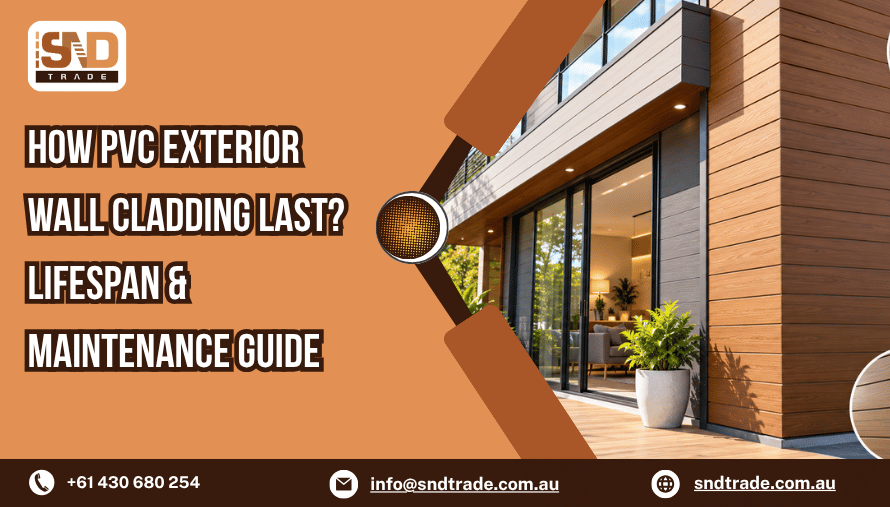
Good-quality PVC cladding usually lasts 20 to 30 years. That’s when it’s fitted properly and looked after. Sun, weather, airflow and workmanship can all push that number up or down.
Choosing an exterior finish isn’t only about looks. Strong sun, heavy rain, salty air and big temperature swings all test a wall. If you’re researching pvc exterior wall cladding Melbourne, knowing the lifespan and upkeep upfront helps you decide with confidence.
What Is the Average Lifespan of PVC Exterior Wall Cladding?
PVC, or polyvinyl chloride, is a lightweight plastic used to make wall panels. Fitted as part of a proper wall system, it shields the wall behind from direct weather.
Most quality panels last about 20 to 30 years. That’s a rough guide, not a guarantee. Some products give up early, while others keep going well past 30 in kind conditions.
What makes the difference:
- Material quality
- Installation standard
- Weather exposure
- Regular upkeep
Always read the manufacturer’s technical sheet before buying. The warranty period and the real-life lifespan are two different things.
What Factors Affect the Life of PVC Wall Cladding?
A few conditions do most of the damage over time. Know them, and you can choose smarter and plan your upkeep.
1. Sunlight and UV Exposure
Australian summers are harsh on exterior walls. Over the years, UV rays can fade PVC, make it brittle, or dull its finish.
Look for panels made for outdoor use with proper UV protection. If your wall cops direct afternoon sun, ask the supplier how the product handles long exposure.
2. Temperature Changes
PVC grows slightly when hot and shrinks when cold. If the installer doesn’t leave room for that movement, panels can buckle or strain their fixings.
This matters in places with hot summers and chilly winters. Following the maker’s installation instructions lets the panels move naturally.
3. Rain, Moisture and Ventilation
PVC doesn’t soak up water the way timber does. But that doesn’t make the whole wall waterproof.
Badly sealed joints, blocked drainage paths or poor flashing can let water in behind the panels. That trapped moisture can harm the wall frame and encourage mould.
Good detailing, a proper weather barrier and clear drainage are what keep the system healthy.
4. Wind and Physical Damage
Strong wind, flying debris and knocks can crack panels or loosen weak fixings. Homes in exposed spots may need a system built for higher wind loads.
Check that the product and fixing method suit your location and building height.
How to Maintain PVC Exterior Wall Cladding
Upkeep is simple. A basic clean and a quick look now and then will spot problems early.
Clean the Panels Regularly
Dust, pollen and cobwebs build up faster than you’d think. Cleaning every six to twelve months is a good start. Homes near busy roads or the coast may need it more often.
Here’s how:
- Rinse the wall with clean water.
- Use a soft sponge with mild detergent.
- Wipe gently without scratching.
- Rinse off all the soap.
- Let it dry, then check for damage.
Skip hard brushes, strong solvents and harsh chemicals unless the manufacturer approves them. High-pressure washing can also push water behind panels, so go easy.
Inspect Joints, Fixings and Edges
Be sure to inspect your cladding during storm damage assessments and your annual property inspection.
Look out for these signs:
- Loose panels
- Hairline cracks
- Gaps
- Wet areas
Any issues should be checked and repaired immediately.
Keep Drainage Areas Clear
Leaves and dirt can block drainage openings around the cladding. Clear them so water can escape as designed.
Never seal a drainage gap just because it looks unfinished. It’s usually there for a reason.
Is PVC Cladding Suitable for Melbourne’s Climate?
It can be, as long as you pick the right product and get it installed well.
Melbourne throws a lot at a wall: shifting temperatures, heavy downpours and strong summer UV. Coastal or exposed homes face a bit more on top of that.
When comparing products, check:
- UV resistance for Australian conditions
- Expansion and clearance guidelines
- Moisture management details
- Wind rating and fixings
- Colour stability and spare panels
Ask for the product specifications and installation requirements before you commit. The right system should meet your home’s needs, not just your style preferences.
PVC Cladding vs Timber and Fibre Cement
The best material depends on your budget, your taste and how much upkeep you’re happy to do.
| Feature | PVC Cladding | Timber Cladding | Fibre Cement |
| Upkeep | Usually low | Regular coating | Periodic cleaning, coating checks |
| Moisture | Doesn’t absorb water | Can absorb moisture | Fairly resistant |
| Look | Many colours and finishes | Natural wood grain | Smooth or textured |
| Main risks | UV ageing, impacts, movement | Rot, pests, coating wear | Cracking, joint failure |
| Repairs | Replace damaged panels | Replace or repair boards | Depends on damage |
No material is truly maintenance-free. Fibre cement needs proper dust control during cutting, and timber needs care suited to its species and finish.
Look at the full cost of ownership, not just the price on the quote.
Common PVC Cladding Maintenance Mistakes to Avoid
Small slip-ups can shorten the life of a perfectly good cladding system.
Steer clear of these:
- Harsh chemicals that dull colour
- Ignored cracks letting water in
- Blocked drainage gaps
- Painting without checking compatibility
- Wrong DIY repairs using unsuitable fixings
- Skipped inspections
Painting is a good example. Some coatings don’t stick well, and they can even void your warranty. Check first.
If you notice damp patches, loose panels or widespread warping, call a qualified installer. Surface fixes won’t solve a deeper problem.
Frequently Asked Questions
How long does PVC exterior wall cladding last?
Quality exterior-grade panels can last around 20 to 30 years. This will depend on the type of panel, the way it was installed, and the maintenance of the UV exposure.
Does PVC cladding fade in the sunlight of Australia?
Yes, but only if there is no UV protection. Using exterior-quality panels in Australia prevents this problem.
Is PVC exterior wall cladding waterproof?
The panels resist water, but the whole system isn’t automatically waterproof. Proper joints, flashing, drainage and weather barriers do the real work.
How often should cleaning be done for PVC Cladding?
Cleaning every six months or once a year would be best for most homes. Those near the coast and those that are dusty and congested might need extra cleaning.
Is PVC Cladding suitable for every house in Melbourne?
No. UV performance, wind loading, temperature, fire rating and installation should be taken into account.
Conclusion
PVC cladding can give you a durable, low-fuss finish that lasts around 20 to 30 years. It needs the right product, careful installation and a little regular care. Clean it, keep drainage clear and fix problems early.
If you’re researching pvc exterior wall cladding Melbourne, start by comparing specifications, installation needs and warranty terms before you buy.
Visit SND Trade to explore cladding options and talk through your project. The right choice today can mean an exterior that looks good and performs well for decades.