
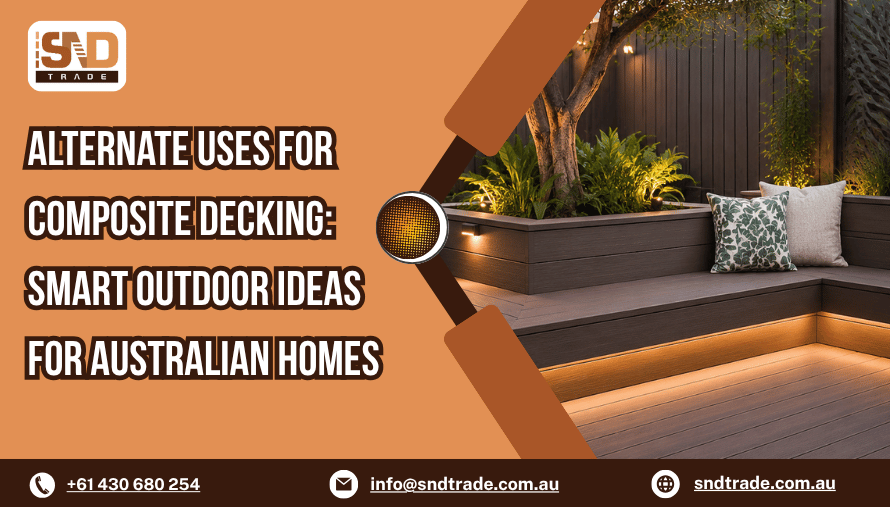
Most homeowners think that composite decking is only for building a standard deck. But that’s a limited way to look at it. Composite boards are actually some of the most flexible materials you can get for any outdoor project.
If you’re sick of timber rot, tired of sanding and sealing, or just over chasing off termites, you’re in the right place. Modern composite boards use a blend of recycled wood fibres and polymers to create a surface that is durable, low-maintenance, and adaptable to multiple applications.
When it comes to the best composite decking Australia has to offer, people are now getting a lot more creative with where they use it. Thinking way beyond the usual ways to use it across their entire outdoor space.
So, let’s dive in: here’s how you can use composite decking all over your yard, with ideas most homeowners don’t even consider.
Why Composite Decking is So Versatile
Composite decking performs exceptionally well in Australian conditions because it is engineered for durability rather than just appearance.
- Weather resistance: Composite decking can withstand UV light, heavy rainfall and temperature changes without suffering from cracks and splits.
- Moisture resistance: The material does not absorb water like timber, which helps decrease the chances of decay and expansion.
- Termite resistance: The material provides termite resistance, which benefits Australians because their timber buildings face threats from pest damage.
- Low maintenance: The product requires no maintenance as it needs no sanding, sealing or repainting until cleaning becomes necessary.
- Easy installation: The boards can be cut and shaped to create custom applications that extend beyond their use as flooring materials.
Composite decking possesses these properties, which enable its use in outdoor structures that require structural, decorative and functional elements.
Top Alternate Uses for Composite Decking
Outdoor Wall Cladding Panels
You can mount composite decking vertically and use it as cladding for garden rooms, exteriors, or feature walls. It gives a sharp, modern finish and holds up well against the weather.
Unlike regular timber, you don’t need to keep sanding or staining it, and the colour stays true over time. The best part? If you want your deck and walls to match seamlessly, composite makes it simple.
Garden Pathways and Walkways
Composite boards work great as pathways, whether you want a floating walkway or a ground-level path through the garden. Their textured surface makes them less slippery when wet, which helps keep everyone safe. Plus, compared to gravel or stepping stones, composite is much easier to maintain. Just give it a quick clean now and then.
Built-in Seating and Benches
Composite decking can be used to build-in benches around a deck or fire pit? It is a smart choice. It won’t splinter, fade, or rot like timber. You get sturdy, comfortable seating that lasts, and it keeps your outdoor space looking tidy without needing lots of extra furniture.
Pergolas and Privacy Screens
You can use composite boards in pergolas, for privacy screens, or with aluminium and steel frames to create stylish shade structures. They won’t fade or warp in the sun, and they handle moisture well. It is an important thing for anyone planning an outdoor retreat or garden hideaway.
Planter Boxes and Raised Garden Beds
Composite decking is a solid choice for planter boxes or raised garden beds. It doesn’t rot, even when packed with damp soil. Raised garden beds built with composite boards maintain structural integrity longer than timber, making them a practical choice for long-term landscaping.
Outdoor Kitchen Cabinets
If you’re building an outdoor kitchen or BBQ area, composite boards make durable, low-maintenance cabinets and benchtops. They don’t suck up stains, spills, or grease, and you won’t spend time scrubbing away at absorbed messes. Unlike wood, they do not absorb stains easily and are simple to clean.
Poolside Lounging Areas
Composite decking comes into its own around pools. It’s slip-resistant, splinter-free, and feels good under bare feet. Unlike timber, composite won’t warp, and it doesn’t crack if it’s soaked all day. Safer for kids and pets, and you don’t have to tiptoe around looking for sharp edges.
Fencing and Gates
Want a fence or gate that looks sharp without endless maintenance? Composite boards can be useful. They provide a clean, uniform look and don’t require regular painting. Your fencing stays neat with minimal maintenance over the years.
Balcony Flooring
For apartments or smaller homes, composite decking is a practical choice on balconies. It’s lightweight but tough, and installation is pretty simple, especially with pedestal systems. Water drains away easily, and you won’t spend your weekends maintaining it.
Feature Walls and Decorative Panels
Composite boards are finding their way onto feature walls, both indoors and outside. They bring texture and style to places like alfresco areas, home entrances, or garden backdrops. You won’t need to stress over their upkeep like you would with timber panels. That’s a win for anyone who wants great design with less hard work.
Cost vs Value: Is It Worth It?
Composite decking costs more upfront than timber, but you get more for your investment in the long run. You can forget about sanding, staining, or sealing every year. These boards last, usually 20 to 30 years easily (sometimes even longer) if you pick a high-quality product. That means you’ll spend a lot less on repairs and replacements over time.
Timber decks need regular upkeep, and in harsher climates, you might have to replace them after just 10 to 15 years. So, when you’re choosing the best composite decking Australia, don’t just look at the cost. Think about the whole lifespan. Paying a bit more for good boards with UV protection, capped surfaces, and strong warranties usually saves you money (and hassle) over time.
Design Tips for Australian Homes
- Go for lighter colours in hot areas as they reduce heat absorption.
- Match decking with cladding if you want that inside-outside flow
- Pick materials that suit your location:
– Coastal areas: Make moisture and salt resistance a priority.
– Urban Spaces: Modern colours and smart, compact designs work well.
- Test samples outdoors before choosing, as natural light changes how colours look.
Common Mistakes to Avoid
- Choosing low-quality boards without UV or moisture protection.
- Make sure joist spacing is right. If not, your deck won’t last.
- Leave room for boards to expand, or you’ll soon see warping.
- Use the right fasteners and fixing systems.
- Double-check your supplier’s certifications and warranty.
Proper planning and quality materials prevent most long-term issues.
FAQs
Can you use composite decking on walls?
Absolutely. People often use these boards for outdoor wall cladding and façades.
Is composite decking good for making outdoor furniture?
Yes. It’s tough and handles weather well. It works great for benches, seating, or storage.
How long does composite decking in Australia last?
If you install it properly and pick a quality supplier, expect at least 20–30 years and sometimes more.
Is composite decking waterproof?
It’s not totally waterproof, but it doesn’t soak up nearly as much water as timber. So it handles wet conditions much better.
What is the best composite decking Australia?
Look for UV resistance, capped surface tech, a solid warranty, and proof it can handle Aussie weather.
Conclusion
Composite decking can shape your whole outdoor area. You’ll see it on walls, paths, seating, and even outdoor kitchens. It’s tough, easy to look after, and fits modern Australian homes perfectly.
Thinking of an outdoor upgrade? Don’t limit yourself to the typical deck. The right composite material can completely change your outdoor space.
Check out SND Trade for the premium composite decking Australia designed to handle all the Australian weather conditions. It’s time to enjoy smarter outdoor living.