
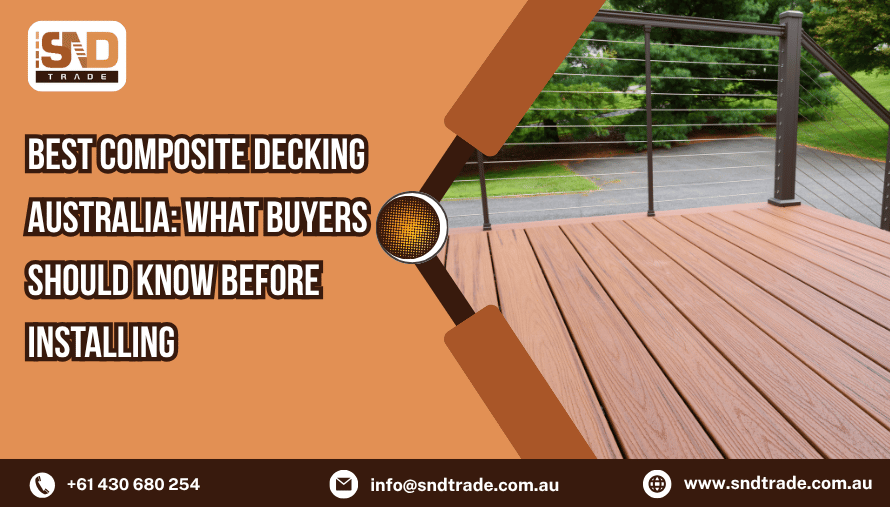
Whether it’s a backyard entertaining area, a poolside deck, or an alfresco extension off the kitchen, decking has become a real focal point in modern Aussie homes. Australian homeowners are putting more time, money, and thought into their outdoor spaces than ever before. Timber has always been a go-to, but composite decking is steadily taking over, and once you understand why, it’s not hard to see the appeal.
If you’re thinking about working with composite decking installers in Melbourne, this guide covers everything you need to know before you spend a single dollar.
What Is Composite Decking?
- Composite decking is a synthetic board made from a blend of recycled wood fibers and plastic polymers. The concept is simple: you get something that looks like real wood but performs much better outdoors than wood ever could.
- It won’t break down, rot or warp like natural wood
- Most composite boards have a protective outer capping layer that is resistant to UV, moisture and stains
- Designed for the harsh Australian climate, from the scorching Melbourne summers, to the wet and humid conditions up north
Why Composite Decking Is Growing in Popularity
Australia’s climate is tough on outdoor materials. Very few people expect that harsh UV, heavy rain, and wild swings in temperature can cause timber decks to crack, fade, warp and rot so quickly.
Key benefits include the following:
- Easy on maintenance: no staining, painting, and sealing is required.
- Durability: It lasts for years even with harsh Australian weather conditions.
- Termite resistance: another advantage for many regions in Australia.
- Anti-slip features: safer to use near swimming pools or wet surfaces.
- Uniform surface: does not turn gray or fade over time.
- Environmentally friendly: it consists of recycled materials.
For busy families, low maintenance can be a reason enough to consider it seriously.
Choosing the Right Composite Decking Product
Not every composite board on the market is worth your money. Here’s what to look at when comparing products:
- UV Resistance
Australia’s sun is brutal. Look for boards that are specifically engineered for local conditions with proper UV protection built in, not just surface coating. - Moisture Resistance
If your deck is near a pool, in a coastal area, or just gets a lot of rain, you need boards that genuinely resist swelling and mold, not just handle light moisture. - Slip Resistance
Check the slip rating and make sure it meets Australian safety standards, especially if kids or elderly family members will be using the space regularly. - Warranty Coverage
Reputable brands back their products with warranties ranging from 15 to 30 years. A strong warranty tells you a lot about how confident the manufacturer is in their own product. - Appearance and Colour Options
Modern composite decking comes in a solid range of timber-look finishes and colors. Take your time choosing something that actually suits your home’s exterior rather than just picking whatever’s in stock.
Why Professional Installation Matters
Even the best composite boards will underperform if they’re not installed properly. Good installation means correct board spacing, proper drainage, a solid subframe, and compliance with Australian building requirements.
That’s simply why choosing experienced composite decking installers in Melbourne can make such a difference. Local installers understand Melbourne’s specific conditions, council requirements, and how to set up a deck that genuinely lasts. “Doing it right the first time saves a lot of headaches and money down the road.”
Common Mistakes Buyers Make (And How to Avoid Them)
- Going for the cheapest option
Budget composite boards from unknown brands often fade, stain, or swell within a few years. Spend a little more upfront and save yourself a headache later
- Skipping the subframe
Some people try to reuse an old timber subframe. This is risky. A new composite deck deserves a proper, level subframe built for the job
- Not checking council requirements
In many Melbourne areas, decks over a certain height require a building permit. Always check with your local council before construction begins
- Ignoring drainage
Poor drainage under your deck leads to moisture build-up, mould, and premature deterioration of the subframe
Composite Decking vs Timber Decking
| Factor | Composite Decking | Timber Decking |
| Upfront Cost | Higher initial investment | Lower to start with |
| Maintenance | Barely any, just a rinse | Regular oiling, sanding, sealing |
| Lifespan | 20–30 years easily | 10–15 years with good care |
| Looks Over Time | Stays consistent and fresh | Fades, greys, and weathers |
| Splinters | None at all | Common as it ages |
| Slip Resistance | Built-in, safer underfoot | Can get slippery when wet |
| Refinishing Option | Not refinishable | Can be sanded and restained |
| Best For | Low-fuss, long-term value | Tight budget, natural purists |
How Long Does Composite Decking Last?
Premium composite decking typically lasts between 20 and 30 years when installed correctly and looked after properly. Maintenance is simple: sweep off debris, give it an occasional wash, and clean up spills when they happen. That’s genuinely about it.
Compare that to the yearly timber maintenance routine, and the difference is pretty clear.
Final Thoughts
Composite decking has earned its place as one of Australia’s most popular outdoor flooring choices, and for good reason. It’s durable, attractive, low maintenance, and genuinely adds long-term value to your home.
Do your research before you decide, compare products carefully, check warranties thoroughly and work with trusted composite decking installers Melbourne that know their stuff. A quality composite deck is an all-weather feature of the outdoors, but it’s also an investment in the everyday lifestyle of your home for years to come.
FAQs
Is composite decking suitable for Australian climate conditions?
Yes. Good quality composite decking is especially made to resist the strong sun and rain of the Australian weather conditions.
Can composite decking get hot during summer?
Like all other outdoor material, composite decking too tends to heat up, but light-colored deck boards are better at resisting heat than dark-colored ones.
What is the maintenance requirement of composite decking?
Very little. Just occasional cleaning should suffice to maintain its good appearance.
Can composite decking be installed around pools?
Yes. Many composite decking products offer excellent moisture resistance and slip-resistant surfaces, making them ideal for pool areas.